
Why Businesses Should Take User Experience (UX) Seriously
Businesses often overlook the design of their website. They assume that because “the website works” there’s nothing else to fix. A website that simply “works” is a very low bar, and user experience (UX) is one of those topics that gets sidelined as something that doesn’t matter or that AI can magically fix later.
This mindset is costing companies money.
In our own analytics work from real user data, we see that poor UX can cause users to leave a website quickly, not engage with the material, abandon carts, and sow distrust. Amazon’s “The Trillion Dollar UX Problem” report caught our eye for this very reason. It echoes a lot of the patterns we often see but quantifies the real economic impact for neglecting UX.
Amazon’s study interviews 60 of the world’s leading UX designers to get their insight on the ROI of UX across different websites and apps. Expert insights, along with Amazon shopping data, concludes that failure to invest in UX is creating a billion dollar loss in revenue, a trillion dollar issue within the next 3 years.
Here are some of our favorite quotes from these leading experts:
“When we first started using UX design as a business practice, we grew revenues by 895% in the first three months. By making UX a focus in everything we do, we have fostered a highly-engaged user community and internal workforce.”
- Raffaela Rein, founder, The UX School
“88% of online consumers are less likely to return to a site after a bad experience.”
- Justin Mifsud, founder, Usability Geek
At one company we redesigned the checkout flow and achieved an increase in conversion by up to 105% (mobile traffic, 85% desktop traffic). Some UX projects have a very direct impact on the bottom line.”
- Tobias Treppmann, Mentor at CareerFoundry
“Design-driven businesses have outperformed the S&P by a whopping 228% over the past 10 years. The bottom line, good design = good business.”
- Joanna Ngai, UX designer, Microsoft 5
When we analyze underperforming websites, the problem is rarely just the design aesthetics (well, occasionally it is). It’s usually about unclear messaging, bad user flows, slow feedback/load times, or missed opportunities to grab someone’s attention to convert. Sometimes we try a little too hard to grab someone’s attention with a barrage of popups, and when UX is ignored, conversion rates and revenue take a hit.
Here are six stats from several UX research articles that prove this:
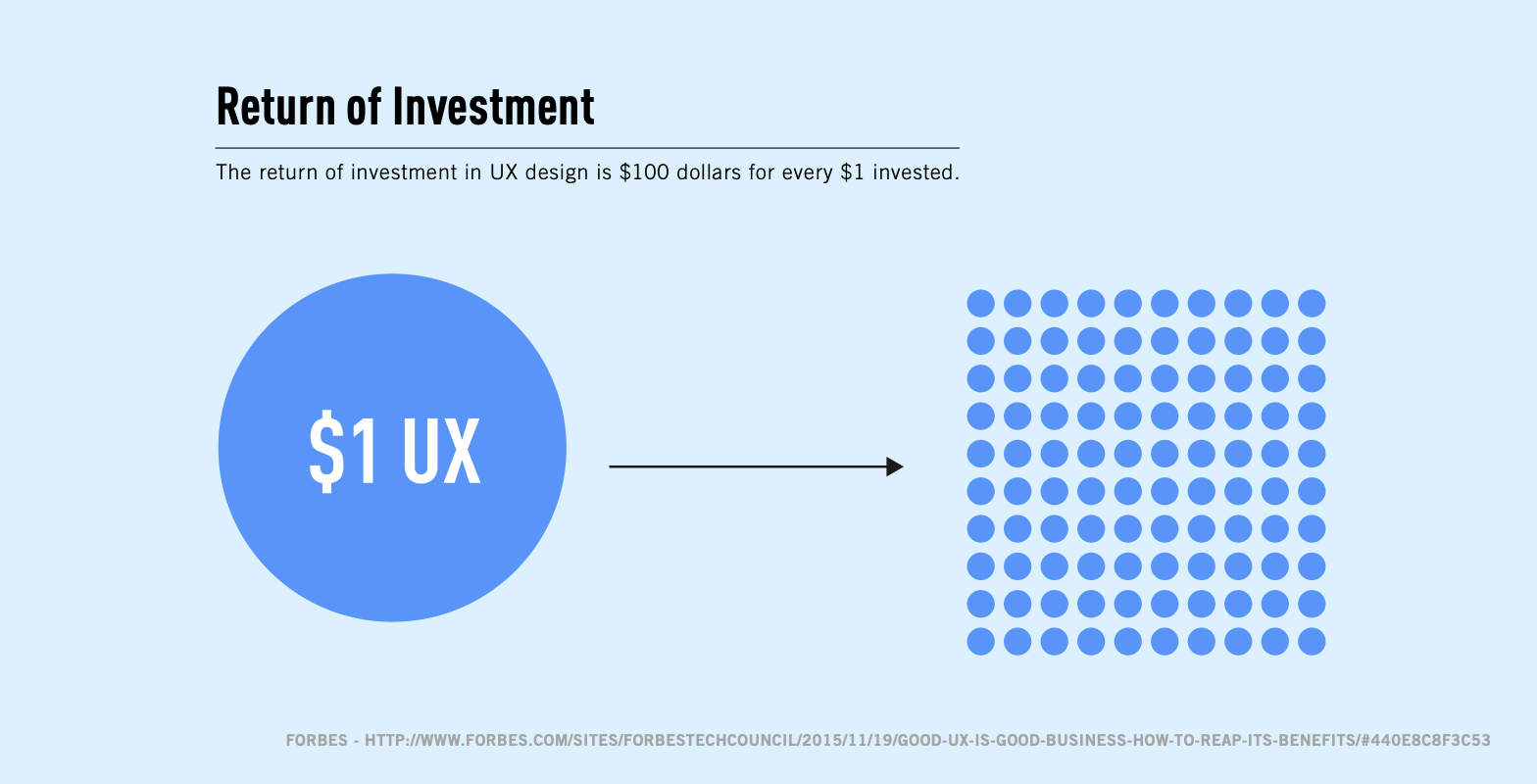
A well-designed UX can deliver up to a 9,900% ROI — that’s $100 back for every $1 invested.
27% of US online shoppers have abandoned an order in the past quarter solely due to a too long / complicated checkout process
Product pages that were specifically optimized for customers using mobile, saw a 30% growth in sales and a 50% decrease in bounce rate.
88% of consumers won’t return after a bad experience.
First impressions are up to 94% design-related, and you have mere 50 milliseconds to make a strong one.
Slow performance (even just delays over 3 seconds) causes over half of users to abandon a site.
Businesses that take the time to understand their users often see greater success. From our own lens, we’ve seen clients have up to 300% increase in conversions from the effects of UX optimizations.
Another real world example can be seen with HubSpot, who recently had a major iteration of their website that was led by a team of three designers. The team spent three months running user tests on conversion flows, copy messaging, UX, and design. The end result was conversion rates doubling! With a website that receives over 10 million visitors a month, we can assume this had a large impact on revenue, all thanks to a three month design investment.
Another impressive example is from Staples, who increased their online revenue by 500% after its UX-focused site redesign, according to Human Factors.
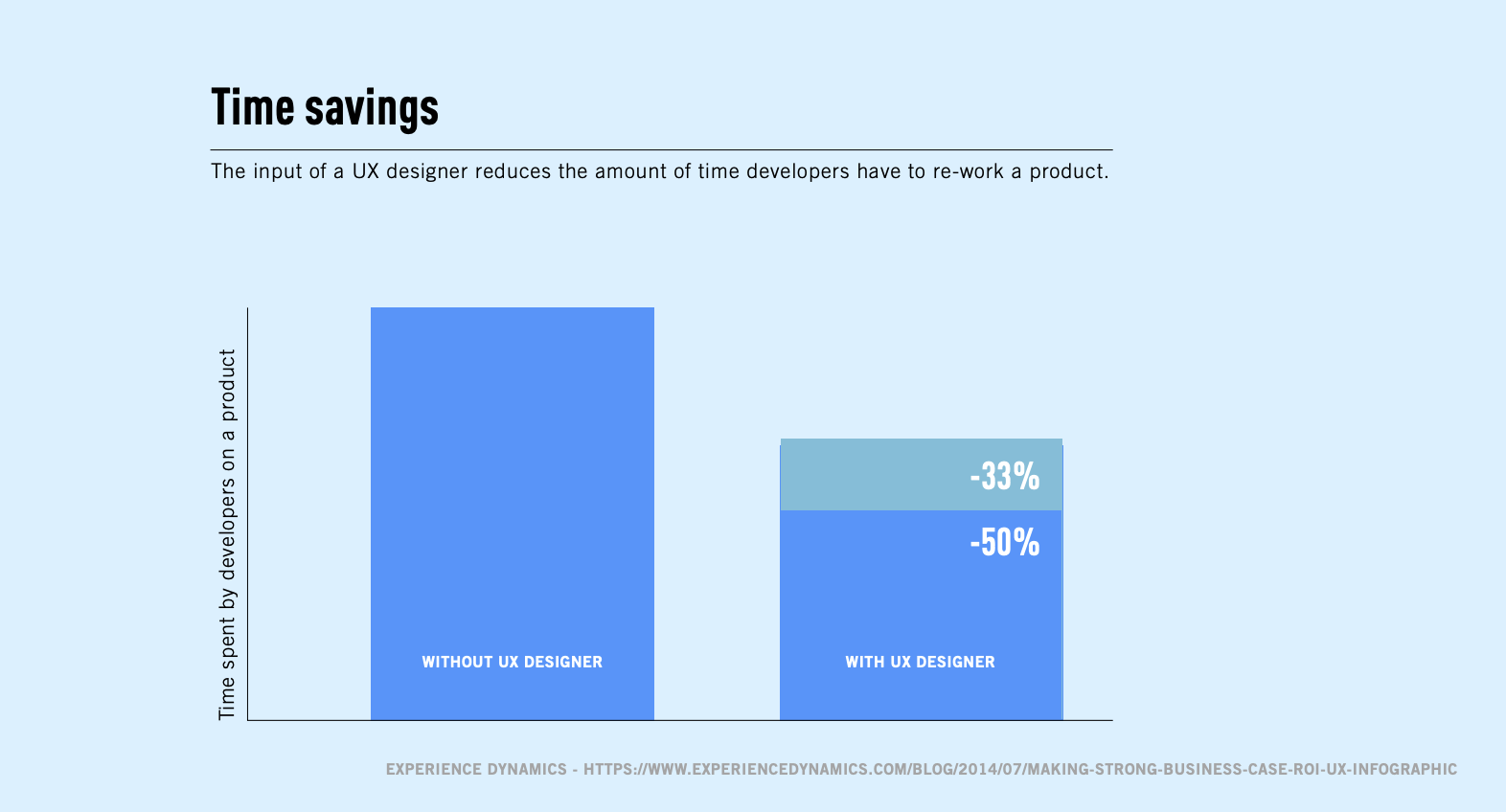
The monetary costs of design are evident by these examples, they can be quantifiably measured by sales revenue. But there are hidden costs as well when UX is ignored. Dr. Susan Weinschenk provided evidence showing that UX involvement early can cut development rework times by up to 50% and reduce the overall project time by 33-50%. This saves money before you even launch. Not to mention, the costly reworks that can come later, considering the cost of fixing an error after development is 100 times that of fixing it before development starts.
So, what’s the main takeaway of all this? Good design isn’t purely for aesthetics, it’s about good communication, trust, and efficiency. It’s a business strategy that leads to huge financial returns: every $1 invested in UX sees a return of $100. If you put UX first, users are more likely to convert, come back, and recommend you to others. In today’s attention economy, user experience is what separates you and makes you memorable.
References
https://www.humanfactors.com/design-project.aspx
https://www.forrester.com/report/The-Six-Steps-For-Justifying-Better-UX/RES117708
https://baymard.com/learn/ux-statistics